Modern electronics rely on printed circuit boards (PCBs) to connect components, distribute power, and transmit electrical signals. From industrial control equipment and automotive electronics to wireless communication devices, PCBs must meet increasingly demanding requirements for reliability, compactness, and performance. Understanding what PCB boards are made of helps engineers choose suitable materials for different operating environments and product designs.
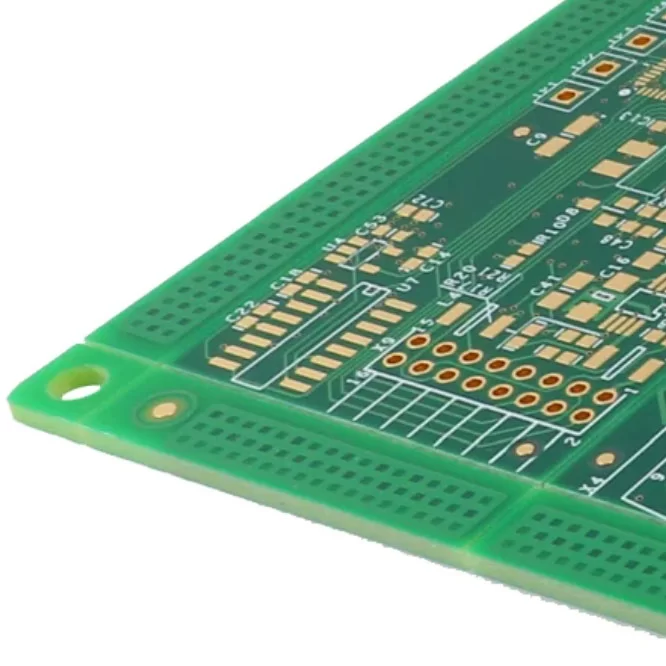
A PCB is not simply a flat piece of insulating material with copper traces. It is a carefully engineered structure that combines conductive metals, insulating laminates, protective coatings, and identification markings. Each material contributes to the board's electrical characteristics, mechanical strength, thermal behavior, or manufacturability.
In this guide, we explore the primary PCB board materials, compare common substrate options, and explain the factors that influence material selection. Understanding these differences can help designers and manufacturers develop circuit boards that meet application requirements while balancing performance, production complexity, and cost.

What are the Basic Materials in a PCB Board?
The materials used in a printed circuit board depend on its layer count, electrical requirements, mechanical design, and intended application. Although specific constructions vary, most conventional rigid PCBs combine several essential materials that work together to support and protect the electrical circuit.
Substrate. The substrate forms the structural foundation of a PCB. Common rigid boards use fiberglass-reinforced epoxy laminate, while flexible circuits may use polymer films such as polyimide. The substrate provides mechanical support, electrical insulation, and dimensional stability. Its properties influence board thickness, durability, and suitability for different manufacturing processes.
Copper Foil. Copper forms the conductive pathways that connect electronic components. During PCB fabrication, patterned copper becomes the traces, pads, and planes responsible for carrying signals and distributing power. Copper thickness and trace geometry affect current capacity, resistance, and heat generation. Designers must select appropriate copper specifications to meet electrical and thermal requirements.
Dielectric Layers (The Core and Prepreg). Multilayer PCBs use insulating materials to separate conductive layers while maintaining the required electrical and mechanical structure. A core is a cured laminate, typically consisting of a dielectric substrate with copper foil bonded to one or both sides. Prepreg contains reinforcing fibers impregnated with partially cured resin. During lamination, heat and pressure bond the layers together to form a consolidated board. The dielectric properties and thickness of these materials influence impedance, capacitance, and signal behavior. Explore multilayer PCB construction for more information about multilayer board structures.
Solder Mask. Solder mask is a protective polymer coating applied over selected copper areas, leaving designated pads exposed for soldering. It helps reduce accidental solder bridging, protects copper from environmental contamination, and improves electrical isolation between neighboring conductors. Green is a common color, but other options are available depending on manufacturing requirements and design preferences.
Silkscreen. The silkscreen layer carries printed information such as component reference designators, polarity indicators, logos, and assembly instructions. These markings help technicians identify components, assist with assembly and inspection, and simplify maintenance. Silkscreen is usually applied using specialized PCB marking processes, and its placement must avoid covering exposed pads or interfering with assembly.
Surface Finish. Exposed copper pads can oxidize during storage and handling, potentially affecting solderability. A surface finish protects these areas and provides a suitable interface for component attachment during PCB assembly. Common finishes include lead-free HASL, ENIG, immersion silver, and OSP. Each option has different characteristics related to flatness, shelf life, cost, and compatibility with component packages and assembly processes.
What are the Common PCB Substrates?
The substrate is one of the most influential choices when determining what PCB boards are made of. Different substrate materials offer different combinations of electrical performance, temperature resistance, flexibility, mechanical strength, and cost. The best option depends on the board's operating conditions and design priorities rather than on a single material being universally superior.
FR-4 (Flame Retardant 4). FR-4 is one of the most widely used materials for rigid printed circuit boards. It typically consists of woven fiberglass reinforcement combined with epoxy resin formulated to meet applicable flame-retardancy requirements. FR-4 provides a practical balance of mechanical strength, electrical insulation, availability, and manufacturing cost. It is commonly used in consumer electronics, industrial controllers, communication equipment, and many automotive electronic assemblies. However, standard FR-4 grades may not provide the ideal dielectric or thermal performance for every high-speed or high-temperature application.
High Tg FR-4. High glass-transition-temperature (Tg) FR-4 is designed to provide improved resistance to softening and dimensional changes at elevated temperatures compared with lower-Tg alternatives. It can be useful for multilayer boards, thermally demanding designs, and assemblies exposed to lead-free reflow processes. The actual performance depends on the laminate grade and its thermal properties, so designers should review the manufacturer's specifications rather than relying on Tg alone. Decomposition temperature, coefficient of thermal expansion, and thermal reliability also matter.
Polyimide. Polyimide is a high-performance polymer used in flexible and rigid-flex circuit constructions. It offers strong thermal resistance and can support applications where repeated bending, limited installation space, or demanding environmental conditions are important. Polyimide films are widely used in flexible printed circuits for wearable devices, compact electronics, cameras, and other assemblies that require flexible interconnections. Material selection should account for the specific polyimide system, adhesive construction where applicable, and the mechanical requirements of the finished circuit. Learn more about polyimide PCB properties and applications.
Teflon. Teflon is a DuPont trademark associated with PTFE-based materials. PTFE and related low-loss laminates are used in PCB designs that require controlled electrical performance at high frequencies. Their dielectric properties can help reduce signal loss in RF circuits, antennas, microwave equipment, and certain high-speed communication systems. Compared with conventional FR-4, PTFE-based laminates may require specialized fabrication processes and tighter control of mechanical handling. Designers should evaluate dielectric constant, dissipation factor, thermal behavior, and the manufacturer's processing capabilities. More details are available on Teflon PCB materials.
What are the Different Factors to Consider when Selecting PCB Board Materials?
Selecting suitable PCB board materials requires a coordinated assessment of electrical performance, thermal conditions, mechanical demands, manufacturing limitations, and compliance obligations. A material that works well for a low-cost consumer device may be unsuitable for a high-frequency communication system or an assembly exposed to repeated thermal cycling. Evaluating the following factors early in the design process helps prevent avoidable production issues and unnecessary costs.
Electrical Requirements. Electrical performance should guide the choice of dielectric and conductive materials. Important parameters include dielectric constant (Dk), dissipation factor (Df), insulation resistance, breakdown strength, copper thickness, and trace current capacity. High-speed digital and RF circuits may require controlled-impedance structures and low-loss laminates, whereas many general-purpose applications can use standard FR-4. Designers should also consider operating voltage, signal frequency, and the required electrical spacing between conductors.
Thermal Properties. A PCB must tolerate the temperatures encountered during operation, soldering, and environmental testing. Important material characteristics include glass transition temperature (Tg), decomposition temperature (Td), coefficient of thermal expansion (CTE), and thermal conductivity. These properties influence dimensional stability, heat dissipation, and the risk of stress at plated-through holes or component connections. Selecting a suitable laminate requires considering the complete thermal profile rather than relying on a single temperature rating.
Mechanical Strength. The substrate must withstand the mechanical stresses associated with manufacturing, installation, and product use. Flexural strength, dimensional stability, stiffness, and resistance to cracking can be important for boards exposed to vibration, mechanical loads, or repeated handling. Flexible and rigid-flex circuits require additional attention to bend radius, copper fatigue, and the number of bending cycles. The appropriate mechanical properties depend on the product's physical design and service environment.
Manufacturability. A substrate must be compatible with the fabricator's equipment and process capabilities. Material selection can influence drilling quality, hole-wall integrity, lamination, copper adhesion, multilayer registration, and final board flatness. High-frequency, high-Tg, and specialized flexible materials may require different process controls from standard FR-4. Before finalizing the design, confirm that the selected laminate, copper weight, board thickness, and stack-up can be manufactured reliably within the required tolerances.
Regulatory Compliance. PCB materials may need to satisfy environmental and market-specific requirements, including restrictions on certain hazardous substances and controls over chemical content. RoHS and REACH are important regulatory frameworks, although their applicability and specific obligations differ. Material declarations and supporting documentation should be reviewed against the requirements of the intended market and end product.
Conclusion
PCB material selection has a direct influence on circuit performance, manufacturing reliability, durability, and overall product cost. Understanding what PCB boards are made of means looking beyond the substrate to consider copper conductors, dielectric layers, solder mask, silkscreen, and surface finishes. Each part contributes to the board's ability to support electrical components and operate reliably in its intended environment.
FR-4 remains a practical choice for many general-purpose applications, while high-Tg laminates, polyimide, and PTFE-based materials serve more specialized thermal, mechanical, and high-frequency requirements. The right choice depends on the electrical design, operating conditions, production process, and applicable compliance requirements.