
RO4350B + IT180 Mix Laminate High Fequency PCB
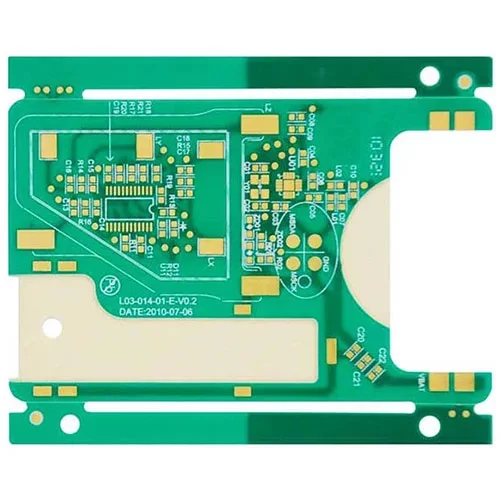


Comprehensive Product Description: RO4350B + IT180 Hybrid High-Frequency PCB
1. Product Specifications & Technical Parameters
Built under strict manufacturing tolerances, this multi-layer hybrid printed circuit board satisfies rigorous IPC standards. Below are the definitive technical parameters defining this product offering:
| Model Name | RO4350B + IT180 Mix Laminate High Frequency PCB Board |
|---|---|
| Material Composition | Rogers RO4350B (Outer RF layers) + IT180 High-Tg FR4 (Inner layers) via Hybrid Mixing Press |
| Layer Count | 6 Layers (Multi-layer Hybrid Stackup) |
| Dielectric Constant (Dk) | 3.48 (±0.05 at 10 GHz) |
| Finished Board Thickness | 1.5 mm (±0.1 mm) |
| Copper Thickness | 1 OZ (Outer & Inner layers available in custom weights) |
| Impedance Control | 50 Ω precise controlled differential/single-ended impedance |
| Dielectric Thickness | 0.508 mm (Core/Prepreg configuration) |
| Thermal Conductivity | 0.69 W/m·K (Enhanced heat dissipation efficiency) |
| Via Structure / Blind Hole | 1L ~ 2L High-Density Interconnect (HDI) Laser Blind Vias |
| Surface Treatment | Chemical Immersion Gold (ENIG) for superior solderability & wire bonding |
| Flammability Rating | UL 94V-0 Certified |
2. Advanced Hybrid Architecture & Material Synergy
Traditional high-frequency system design frequently forces engineers to choose between prohibitive system costs (using 100% PTFE or specialized microwave substrates) and unacceptable signal attenuation (using standard FR-4). Our hybrid configuration resolves this engineering dilemma by combining two distinct material systems into a unified, co-laminated structure:
Rogers RO4350B Outer Layers: Serving the critical radio frequency (RF) and microwave transmission lines, RO4350B provides a tightly controlled dielectric constant (Dk = 3.48) and an exceptionally low dissipation factor (Df ≈ 0.0037). This ensures minimal signal insertion loss up to 40\text{ GHz}, protecting high-frequency integrity where it matters most.
IT180 Inner Layers: IT180 is a high glass transition temperature (Tg \ge 175^\circ\text{C) epoxy resin system reinforced with electrical-grade glass fabric. It provides robust mechanical rigidity, excellent thermal endurance during multiple reflow cycles, and superior Conductive Anodic Filament (CAF) resistance.
Cost-Performance Optimization: By deploying expensive high-frequency laminates strictly where electromagnetic waves propagate (outer layers) and utilizing cost-effective high-Tg FR-4 for power, ground, and digital routing inner layers, customers achieve up to 50\% cost savings compared to full-PTFE builds without sacrificing RF performance.
3. Key Features & Electrical Advantages
The RO4350B + IT180 hybrid platform is meticulously engineered to offer a suite of performance benefits tailored for demanding modern electronics:
Superior Signal Integrity (SI): The low loss tangent drastically reduces attenuation, preventing high-frequency harmonics from distorting data streams or degrading signal-to-noise ratios (SNR).
Precise Impedance Matching: Maintaining a stable Dk of 3.48 across broad temperature and frequency spectra allows design engineers to execute precise 50\,\Omega transmission line calculations with minimal reflection losses or phase shifts.
FR-4 Processing Compatibility: Unlike brittle PTFE-based materials (e.g., RT/duroid) which require specialized sodium etch or through-hole activation treatments, RO4350B processes cleanly using standard epoxy/glass manufacturing lines, enhancing production yield and reducing delivery turnaround.
Advanced HDI Capabilities: Integrated 1L–2L laser-drilled blind vias enable high-density component breakout, fan-out routing, and effective miniaturization for compact module designs.
Enhanced Thermal Management: Boasting a thermal conductivity of 0.69\,\text{W/m·K} alongside a low Z-axis Coefficient of Thermal Expansion (CTE), the board effectively dissipates operational heat from high-power RF amplifiers, preventing localized overheating.
4. Target Applications
Due to its exceptional balance of high-frequency precision, mechanical robustness, and cost-efficiency, this hybrid 6-layer PCB is widely implemented across high-growth technology sectors:
5G Telecommunications Infrastructure: Cellular base station power amplifiers, remote radio units (RRU), and massive MIMO active antenna systems.
Automotive Radar & Advanced Driver Assistance Systems (ADAS): 77\,\text{GHz} collision avoidance radar modules, blind-spot monitoring, and short/long-range telemetry.
Satellite & Aerospace Communication: Low Earth Orbit (LEO) satellite transceivers, airborne communication arrays, and avionics data links.
Broadband & Microwave Test Equipment: High-frequency vector network analyzers, signal generators, and precision instrumentation interfaces.
5. Manufacturing Excellence & Quality Assurance
At Printed Board Assembly, every hybrid high-frequency circuit board undergoes stringent quality control procedures. Our manufacturing methodology encompasses automatic optical inspection (AOI), X-ray alignment for multi-layer lamination, laser depth-controlled drilling, 100\% electrical flying probe testing, and time-domain reflectometry (TDR) impedance verification. We ensure that every batch delivered meets international standards, providing absolute reliability for your mission-critical electronic systems.
If you have any camping barbeque equipment inquiry, please feel free to contact us.
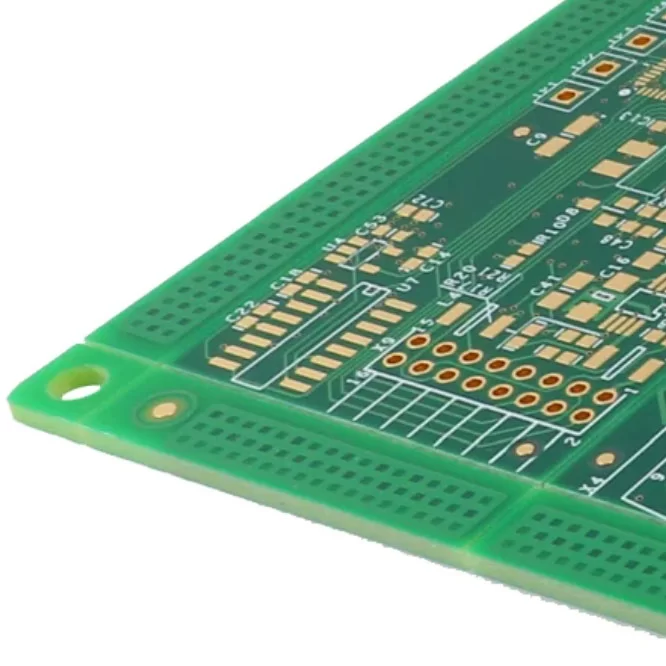
FR-4 stands out as one of the most versatile options. The composition of an FR-4 printed circuit board comprises a woven glass fabric reinforcement impregnated with a flame-retardant epoxy resin binder.

PCB type: Rigid PCB
Layer: Multi-layer
Base material: FR-4
Solder mask: Green
Silk screen: White
Surface treatment: HASL
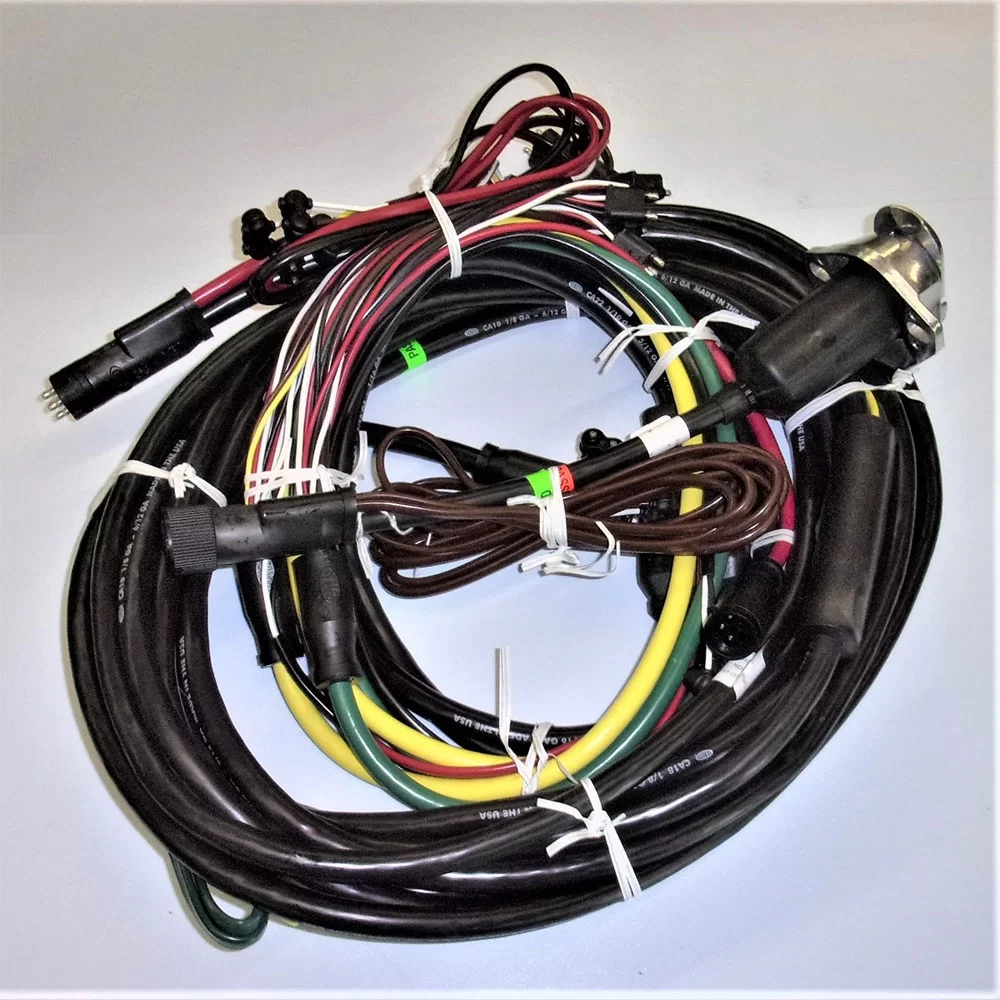
A truck wire harness is like the nervous system of a truck. It is a group of wires, connectors, and terminals that link all the electrical parts together.

Printed circuit board (PCB) defects can interrupt electrical signals, affect system stability, and prevent electronic devices from operating as intended.

Printed circuit boards are essential to modern electronic systems, providing the physical platform that connects and supports electronic components.

Printed circuit board manufacturing and assembly involve two closely related stages: preparing the bare board and installing the electronic components.


