
Multilayer Bluetooth PCB
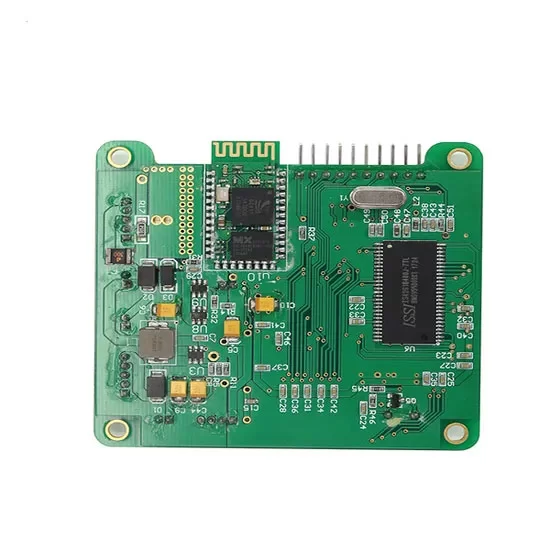


Advanced Multilayer Bluetooth PCB Manufacturing & High-Frequency Assembly Solutions
Engineered for next-generation wireless communication networks, ultra-low power IoT ecosystems, and commercial electronics, PrintedBoardAssembly delivers high-performance Multilayer Bluetooth PCBs. Optimized for multi-band wireless integration, our precision circuit boards provide the exceptional signal integrity, low dielectric loss, and electromagnetic interference (EMI) shielding required for seamless 2.4GHz RF connectivity and complex device interconnections.
Comprehensive Technical Specifications & Material Parameters
To support high-frequency Bluetooth protocols, sensitive transceiver chips, and compact antenna topologies, our multilayer bluetooth circuit boards are manufactured under rigorous industrial standards:
Product Model: Multilayer Bluetooth PCB
Substrate Options: High-performance FR-4, Rogers RO4350B, RO3003, RO4003, RO3006, RT/Duroid 5880, RT5870, Arlon, Isola, Taconic, and PTFE F4BM/Teflon materials
Layer Configuration: Highly scalable 2L to 30L architecture designed for intricate RF routing and dedicated ground plane separation
Dielectric Constant (DK) Range: Flexible DK options spanning 2.20, 2.55, 3.00, 3.38, 3.48, 3.50, 3.6, 6.15, to 10.2 to match specific impedance and wavelength requirements
Core Functionality: Integration of baseband Bluetooth chipsets, integrated or trace-mounted antennas, passive matching networks, and decoupling capacitors
Primary Advantage: Minimizes signal attenuation, insertion loss, and phase distortion across high-frequency wireless transmission bands
RF Engineering Architecture & High-Frequency Signal Integrity
Bluetooth communication relies heavily on maintaining stable carrier frequencies, precise impedance matching (typically 50-ohm microstrip or stripline routing), and clean power delivery to transceiver ICs. Any fluctuation in dielectric constant or trace geometry can cause severe signal reflection, packet loss, and degraded transmission range.
By implementing our advanced multilayer stack-ups, hardware design engineers achieve critical performance benefits:
Controlled Impedance Design: Dedicated reference planes directly adjacent to RF signal layers ensure strict impedance tolerances (+/- 5%), maximizing power transfer efficiency between the Bluetooth transceiver and the antenna.
Minimized Parasitic Capacitance: Advanced low-loss substrates (such as Rogers and PTFE laminates) drastically reduce dielectric absorption and signal dispersion at high frequencies.
Effective EMI Shielding: Internal ground/power layers isolate sensitive radio frequency circuits from noisy digital microprocessors and switching power supplies within the same device housing.
Substrate Excellence: Choosing the Right Material for Wireless Performance
Wireless link budgets depend heavily on substrate selection. Depending on whether your application requires standard cost-sensitive consumer connectivity or ultra-low-loss aerospace-grade telemetry, we offer tailored material foundations:
Standard High-Tg FR-4: Cost-effective and structurally robust for mainstream consumer accessories, smart wearables, and standard portable electronics.
Advanced Rogers & PTFE Laminates: Deliver exceptionally stable dielectric constants across wide temperature ranges, minimizing frequency drift and thermal expansion mismatch in demanding environments.
Rigorous Quality Assurance & Multi-Stage Testing Protocols
Wireless compliance and zero-defect manufacturing are essential for market-ready electronics. Every batch of Multilayer Bluetooth PCBs undergoes strict testing regimes:
Automated Optical Inspection (AOI): High-resolution laser scanning to detect micro-bridging, etching anomalies, and trace width deviations.
Flying Probe & Dedicated Fixture Electrical Testing: 100% open and short-circuit verification confirming complete circuit path continuity.
Impedance Coupon Testing: Time-Domain Reflectometry (TDR) testing to guarantee that controlled impedance lines meet exact design specifications prior to component mounting.
Extensive Industry Applications
Our multilayer wireless circuit boards are deployed across an expansive range of high-reliability industries and market verticals:
Consumer Electronics: TWS earbuds, smartwatches, fitness bands, portable speakers, and handheld communication gadgets.
Automotive & Telematics: In-vehicle infotainment systems, keyless entry modules, TPMS sensors, and vehicle tracking hardware.
Industrial IoT & Automation: Wireless sensor nodes, industrial asset monitors, automated telemetry, and machine-to-machine (M2M) gateways.
-Medical Devices: Portable diagnostic tools, patient telemetry monitors, and wearable health tracking equipment.
Aerospace & Defense: Radar systems, communication arrays, and ruggedized tactical transceivers.
Turnkey SMT Assembly & Manufacturing Capabilities
As an expert Electronic Manufacturing Service (EMS) provider, PrintedBoardAssembly offers an end-to-end manufacturing framework combining high-precision bare board fabrication with automated Surface Mount Technology (SMT) and Through-Hole (DIP) assembly.
Equipped with state-of-the-art pick-and-place systems, automated solder paste inspection (SPI), inline X-ray verification, and multi-zone convection reflow ovens, we effortlessly handle delicate Bluetooth system-on-chips (SoCs), chip antennas, and micro-pitch passive components. Partner with PrintedBoardAssembly to accelerate your wireless product roadmap, optimize your manufacturing supply chain, and ensure absolute hardware reliability. Contact our engineering team today to review your Gerber files and secure a rapid prototype quotation.


If you have any camping barbeque equipment inquiry, please feel free to contact us.
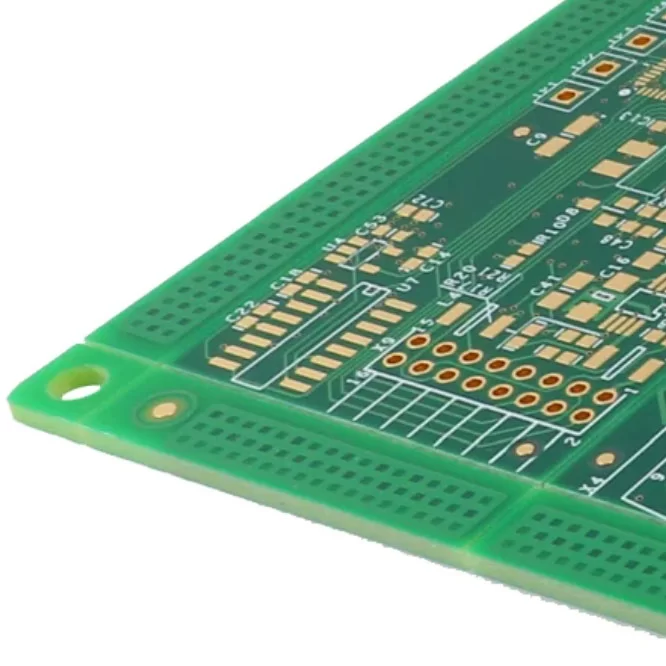
FR-4 stands out as one of the most versatile options. The composition of an FR-4 printed circuit board comprises a woven glass fabric reinforcement impregnated with a flame-retardant epoxy resin binder.

PCB type: Rigid PCB
Layer: Multi-layer
Base material: FR-4
Solder mask: Green
Silk screen: White
Surface treatment: HASL
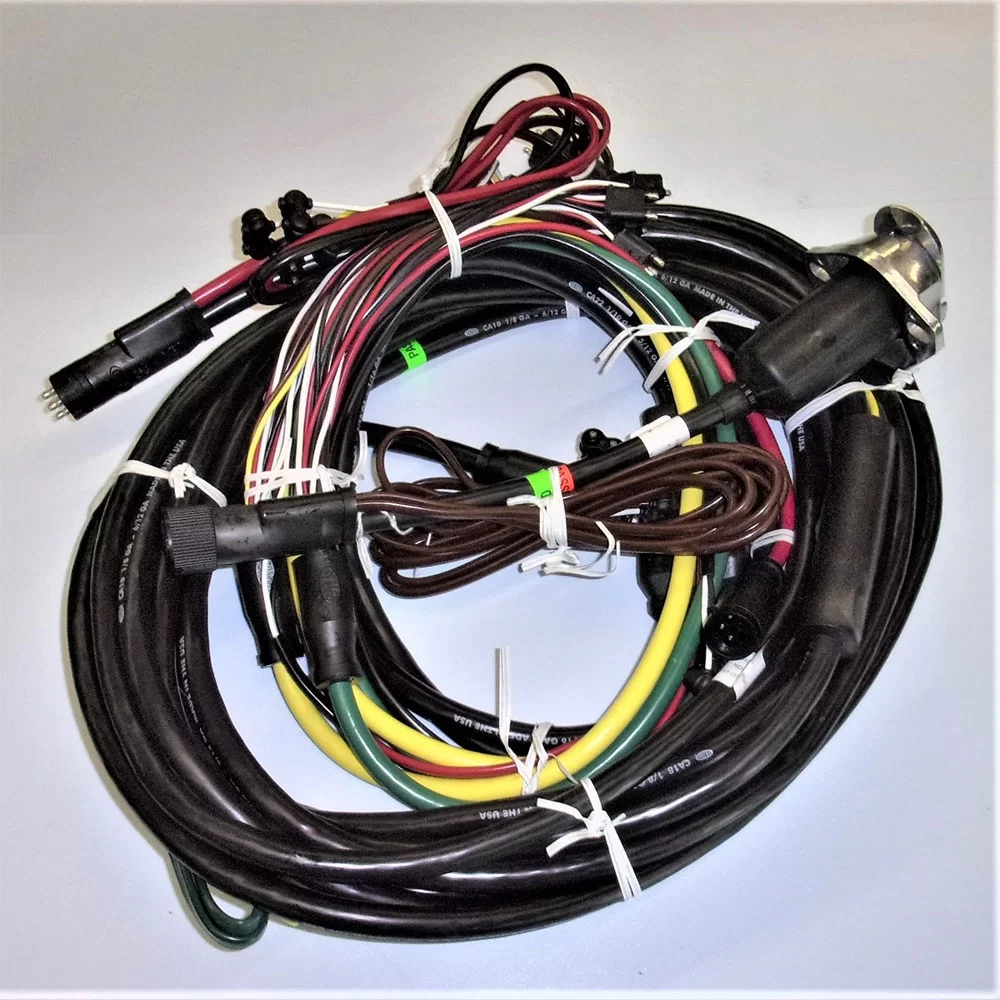
A truck wire harness is like the nervous system of a truck. It is a group of wires, connectors, and terminals that link all the electrical parts together.

Printed circuit board (PCB) defects can interrupt electrical signals, affect system stability, and prevent electronic devices from operating as intended.

Printed circuit boards are essential to modern electronic systems, providing the physical platform that connects and supports electronic components.

Printed circuit board manufacturing and assembly involve two closely related stages: preparing the bare board and installing the electronic components.


