
How Is Microprocessor Different From An Integrated Circuit FAQ


How Is a Microprocessor Different From an Integrated Circuit? A 2026 B2B Procurement & Engineering FAQ
Navigate the complexities of modern electronics. Understand the critical differences between MPUs and ICs to optimize your PCB assembly, reduce supply chain risks, and accelerate your NPI timeline.
🔒 Free DFM Review & BOM Analysis for Qualified Projects
⚠️ The Cost of Confusing a Microprocessor with a Standard IC
In the world of PCB assembly and box build manufacturing, the distinction between a microprocessor (MPU) and a standard integrated circuit (IC) is not just academic—it is a critical factor that impacts cost, lead time, and product reliability. In 2026, the stakes are higher than ever.
🚩 BOM Confusion & Cost Overruns: Treating a complex MPU like a standard logic IC leads to massive layout errors, thermal mismanagement, and incorrect component sourcing. A standard IC might cost $0.10, while a modern MPU can exceed $200.
🚚 Supply Chain Shocks: Data shows that at peak, semiconductor lead times reached 26.3 weeks, with some MCUs exceeding 52 weeks (Data 20). Sourcing a high-performance MPU requires a completely different strategy than sourcing a standard operational amplifier.
💡 Design Bottlenecks: Incorrect pinout or footprint design for a high-speed microprocessor vs a standard IC can lead to costly PCB respins, delaying your time-to-market by months.
🏭 Obsolescence Risks: As component obsolescence accelerates, relying on a single-source MPU without a mitigation plan can halt production lines. Engineering support for redesign is essential (Data 2).
✅ The Core Distinction: Function and Architecture
To answer the fundamental question, "how is microprocessor different from an integrated circuit", we must first understand that a microprocessor is a specific type of IC. An IC is a broad category where multiple transistors are fabricated on a single semiconductor chip. A microprocessor is a specialized IC that contains the central processing unit (CPU) of a computer, capable of executing complex, programmable instructions.
Technical Specifications: MPU vs. Standard IC in PCB Assembly
📊 Source: 2025-2026 Industry Analysis & HUB Circuits Engineering Database. The global PCB market is valued at $82.7B in 2025, growing at 5.8% CAGR (Data 25).
🔧 How HUB Circuits Bridges the MPU-IC Gap for OEMs
With 28 years in PCB manufacturing and 25+ years in PCBA, HUB Circuits provides the engineering depth required to navigate the complexities of both standard ICs and advanced microprocessors. We don't just assemble boards; we partner with you to optimize your entire electronics ecosystem.
NPI Engineering Support
Faster new product introduction cycles depend on collaborative engineering (Data 7). Our team reviews your BOM and PCB layout to ensure correct component selection for both MPUs and ICs, cutting prototype-to-production timelines significantly.
Strategic Component Sourcing
In 2026, supply chains are built for resilience, not just efficiency (Data 15). We leverage our global network to secure high-demand MPUs and standard ICs, mitigating the risks of SKU-specific shortages and geopolitical trade blocks (Data 5).
Full Box Build Integration
Manufacturers are looking beyond simple PCB assembly toward fully integrated systems (Data 11). Our box build services combine circuit card assemblies, cable harnesses, enclosures, and power systems, ensuring your MPU-based design is production-ready. The AI Data Center Box-Build EMS market is projected to reach $24.1B by 2034 (Data 16).
🏆 Trusted by Global Industry Leaders








"HUB Circuits helped us redesign our control board, replacing a costly FPGA with a standard MPU + ASIC combo. This saved us 35% on BOM costs and reduced our lead time from 14 weeks to 6 weeks."

Procurement Manager, USA
"As a Technical Director, I appreciate their deep understanding of high-speed PCB layout for microprocessors. Their engineering support during the NPI phase was invaluable. We achieved first-pass success on our complex MPU-based design."

Technical Director, Germany
"Their box build assembly service is top-notch. They integrated our custom cable harnesses, metal enclosure, and PCBA into a single, ruggedized unit. This reduced our overall supply chain complexity by 40%."

Operations Manager, UK


❓ Frequently Asked Questions: Microprocessor vs. Integrated Circuit
Q1: How is a microprocessor different from an integrated circuit?
All microprocessors are integrated circuits, but not all integrated circuits are microprocessors. An IC is a broad category of electronic components where multiple transistors are fabricated on a single semiconductor chip. A microprocessor is a specific type of IC that contains the central processing unit (CPU) of a computer, capable of executing instructions from software. Other ICs include memory chips, amplifiers, and logic gates, which have fixed or simpler programmable functions.
Q2: What supply chain risks should I watch for when sourcing microprocessors in 2026?
In 2026, the market is moving toward regionally balanced supply chains (Data 15). However, high-demand ICs and power devices remain tight due to geopolitical trade blocks and AI/EV demand spikes (Data 5). Microprocessors, especially advanced nodes, are subject to SKU-specific shortages and extended lead times, which can peak at over 26 weeks (Data 20). Early engagement with a manufacturing partner like HUB Circuits is crucial for securing allocation and mitigating risks.
Q3: How does HUB Circuits' engineering support help with MPU selection?
Our engineering team provides value-added services including BOM review, component selection, and PCB layout optimization. We help you balance performance, cost, and supply chain risk. Contract manufacturers are expanding beyond production into full engineering support, including firmware and test development (Data 10). Our goal is to ensure your design is manufacturable, reliable, and cost-effective.
Q4: Can you handle box build assembly for systems with complex microprocessors?
Absolutely. Box build combines circuit card assemblies, cable/wire harnesses, mechanical enclosures, and power systems (Data 11). We specialize in high-complexity box builds for aerospace, medical, and industrial automation, including systems with advanced MPUs requiring ESD-controlled environments and cleanroom-adjacent assembly areas (Data 16).
Q5: What is the difference between an MPU, MCU, and SoC?
An MPU (Microprocessor) contains only the CPU. An MCU (Microcontroller) integrates a CPU with memory (RAM/ROM) and peripherals on a single chip, suitable for embedded control. An SoC (System on Chip) is even more integrated, including a CPU, GPU, memory, and connectivity modules. Choosing the right one depends on your application's processing needs, power budget, and cost constraints.
Q6: How do you ensure quality for PCBA boards with high-pin-count microprocessors?
We adhere to IPC-A-610 standards and ISO 9001 quality management systems. Our advanced SMT lines are equipped for fine-pitch components (down to 0.3mm BGA), and we perform 100% automated optical inspection (AOI) and X-ray inspection for solder joint integrity, especially for high-density MPU boards.

David Chen is a Senior Electronics Engineer & Supply Chain Strategist at HUB Circuits. With over 25 years of experience in PCB manufacturing and PCBA, David specializes in helping OEMs bridge the gap between complex component selection and cost-effective production. He is a regular contributor to industry discussions on NPI, supply chain resilience, and advanced electronics manufacturing.
🚀 Ready to Optimize Your Electronics Manufacturing?
Limited engineering slots available for Q3 2026 NPI projects. Get a free DFM/DFA review and a detailed BOM optimization report.
📧 Email: wendy@hubcircuits.com | 📞 Phone: +86 15919758328
📍 Address: 3A13, BLDG B, Xinbaosheng, Hexi Community, Xixiang Street, Bao'an District, Shenzhen, China 518126
© 2026 HUB Circuits. All Rights Reserved. | Privacy Policy | Protecting Your IP & Data
📢 *Limited time offer: Free DFM review for first-time clients. Subject to engineering availability.
If you have any camping barbeque equipment inquiry, please feel free to contact us.
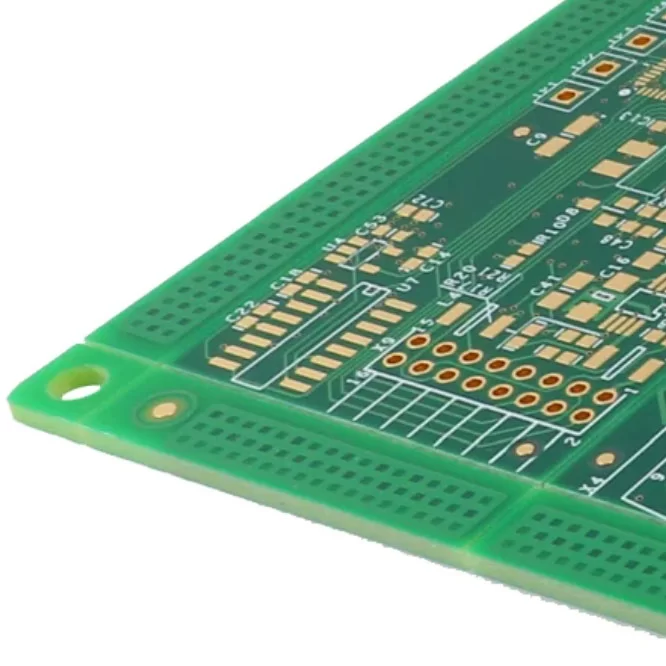
FR-4 stands out as one of the most versatile options. The composition of an FR-4 printed circuit board comprises a woven glass fabric reinforcement impregnated with a flame-retardant epoxy resin binder.

PCB type: Rigid PCB
Layer: Multi-layer
Base material: FR-4
Solder mask: Green
Silk screen: White
Surface treatment: HASL
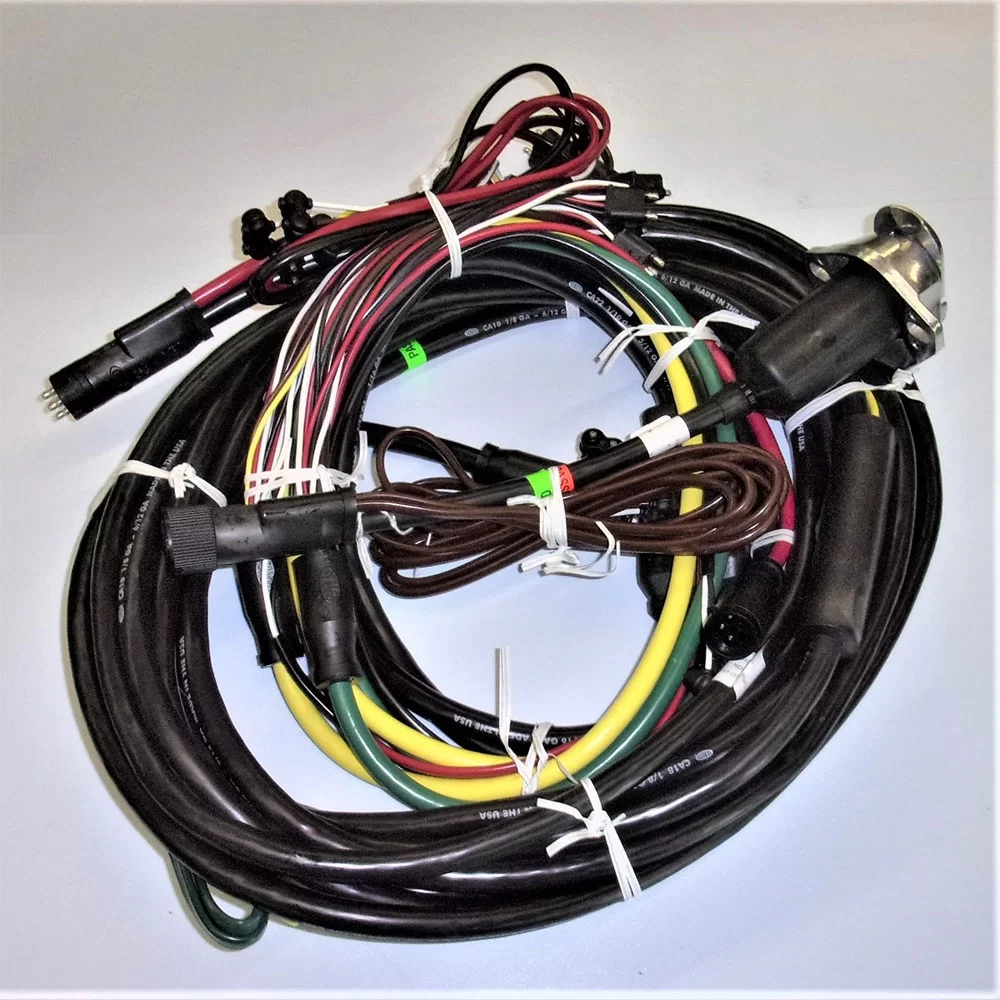
A truck wire harness is like the nervous system of a truck. It is a group of wires, connectors, and terminals that link all the electrical parts together.

Printed circuit board (PCB) defects can interrupt electrical signals, affect system stability, and prevent electronic devices from operating as intended.

Printed circuit boards are essential to modern electronic systems, providing the physical platform that connects and supports electronic components.

Printed circuit board manufacturing and assembly involve two closely related stages: preparing the bare board and installing the electronic components.


