
Choosing the Right Partner for Quick Turn PCB Fabrication & Board Printing
In today's fast-paced electronics market, hardware developers and engineers face a constant battle against the clock. Delays during the prototyping phase can severely derail product launch schedules, while sacrificing quality for speed frequently leads to critical failures during testing. The core challenge is straightforward yet difficult to solve: securing rapid manufacturing turnaround times without compromising the intricate tolerances and reliability required for modern circuitry.
This is where precision-focused manufacturing becomes your definitive competitive advantage. Operating from an advanced facility in Shenzhen, HUB Circuits provides a targeted solution for teams requiring uncompromising quality on tight deadlines. By specializing heavily in rapid prototyping and high-mix, low-to-medium volume production, we eliminate the traditional bottlenecks associated with multi-layer and complex board designs. Equipped with state-of-the-art manufacturing and testing equipment, our one-stop process ensures your visionary concepts transition seamlessly from digital schematics into highly reliable, test-ready hardware.
Engineering Standards for Quick Turn PCB Fabrication & Board Printing
Achieving flawless execution under expedited timelines requires a foundation built on rigorous engineering protocols. We do not simply rush the manufacturing process; we optimize it through advanced fabrication technologies tailored for high-frequency, high-speed, and high-density interconnection (HDI) applications.
| Performance Metric | Industry Significance | Our Engineering Standard | Advantage |
|---|---|---|---|
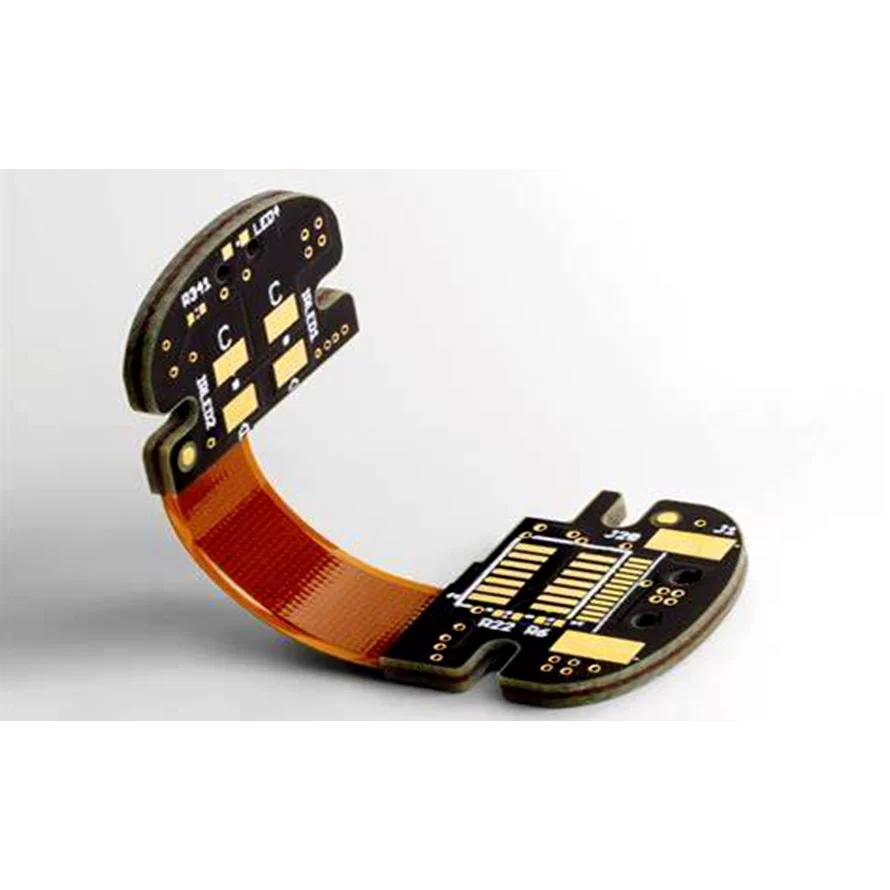
| Layer Count Capability | Determines routing density and supports complex circuit architectures. | 1 to 32 Layers | Provides exceptional versatility for advanced HDI, Flexible, and Rigid-Flex board requirements. |
| Quality & Safety Certification | Mitigates compliance risks in mission-critical applications. | ISO 9001 Certified & UL Recognized | Guarantees uncompromising safety and process control for medical, automotive, and industrial electronics. |
| Advanced Material Processing | Crucial for thermal management and maintaining signal integrity. | Aluminum Base & High-Frequency Laminates | Delivers superior heat dissipation and minimal signal loss, ideal for demanding telecommunications equipment. |
| Precision Tolerances | Impacts component assembly and long-term mechanical durability. | Fine line width/spacing with advanced surface finishes | Ensures highly accurate component placement and robust environmental resistance during downstream assembly. |
Maximizing ROI with Quick Turn PCB Fabrication & Board Printing
Financial performance in hardware development is intrinsically linked to supply chain agility. Extended lead times trap valuable capital in endless R&D cycles and delay product monetization. By integrating comprehensive one-stop services—bridging the gap seamlessly from initial bare board fabrication to final assembly—enterprises can aggressively consolidate their vendor lists and eradicate the hidden costs of logistical fragmentation.
Leveraging a certified manufacturing partner with deep expertise across telecommunications, medical, industrial control, and automotive electronics ensures your prototypes are engineered for mass-production scalability from day one. This proactive approach to design-for-manufacturing drastically reduces costly revision cycles, accelerates your time-to-market, and ultimately transforms a streamlined supply chain into a driver of long-term profitability.
Related products


Top Selling Products



PCB Via Filling: Enhancing Reliability and Performance
The continuous development of electronic devices has created a growing demand for compact, high-performance circuit boards. From advanced computing systems to industrial control equipment, modern electronics increasingly rely on printed circuit boards (PCBs) with higher component densities, more complex routing structures, and stricter reliability requirements.

How to Solder Wire to PCB Board Correctly
Wire soldering is an essential skill in electronics development, circuit board repair, and electronic product manufacturing. A properly soldered connection helps maintain stable electrical performance while preventing wires from loosening during handling, installation, or equipment operation.

How to Repair PCB Board: Troubleshooting & Fixes
Printed circuit board (PCB) defects can interrupt electrical signals, affect system stability, and prevent electronic devices from operating as intended.

How to Design a PCB: A Complete Guide
Printed circuit boards are essential to modern electronic systems, providing the physical platform that connects and supports electronic components.


