
Overcoming Complexity in Professional PCBA Main Board & Controller Engineering
Navigating the transition from complex electronic design to a functional, market-ready product often presents significant hurdles in signal integrity and thermal management. For industries like medical diagnostics and industrial automation, the stakes of a controller failure are exceptionally high. Precision in Professional PCBA Main Board & Controller Engineering is not just a preference; it is a necessity for operational continuity.
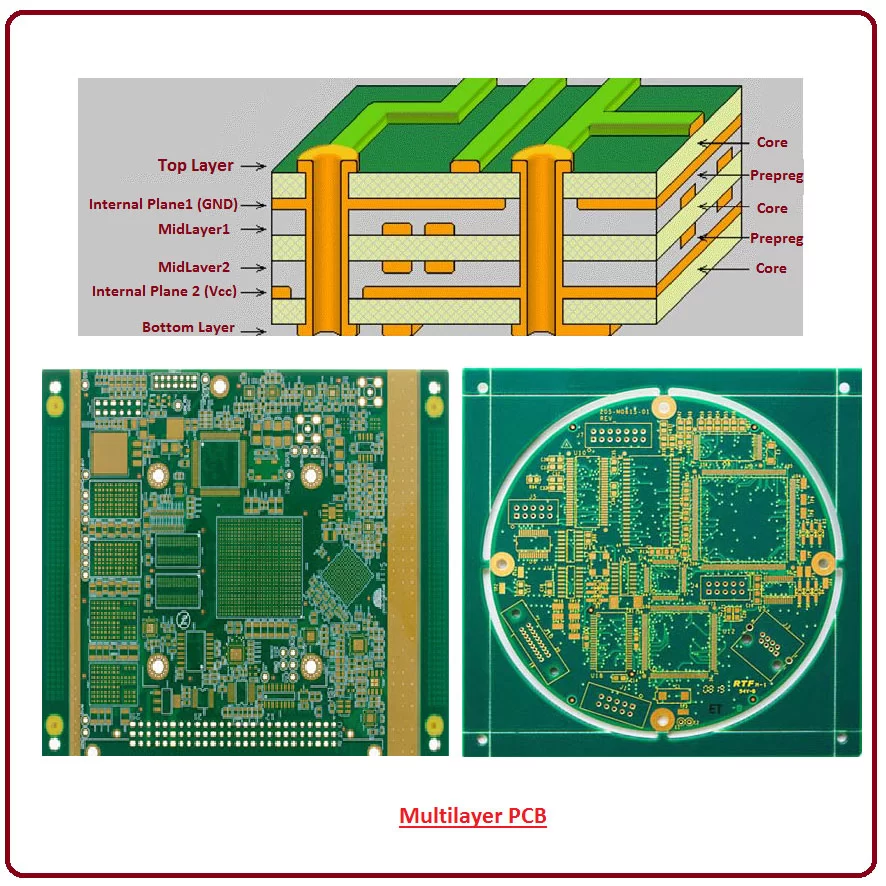
HUB Circuits addresses these critical pain points by specializing in high-mix, low-to-medium volume fabrication. Based in the heart of Shenzhen’s technology hub, we leverage ISO 9001 certified workflows and UL recognized safety standards to ensure that every main board we engineer meets rigorous global benchmarks. Our infrastructure is purpose-built to handle 1-32 layer complexities, providing the rapid prototyping capabilities required to shorten your time-to-market without compromising the structural integrity of your core controllers.
Strict Technical Benchmarks for Professional PCBA Main Board & Controller Engineering
To maintain leadership in telecommunications, medical, and automotive electronics, we adhere to stringent engineering protocols that go beyond standard assembly. Our focus on High-Density Interconnection (HDI) and high-frequency material science ensures that every controller remains stable under extreme conditions.
| Performance Metric | Industry Significance | Our Engineering Standard | Advantage |
|---|---|---|---|
| Layer Complexity | Determines signal routing density and board footprint. | Up to 32 Layers | Supports ultra-compact and complex controller designs. |
| Signal Integrity | Crucial for high-speed data processing and wireless comms. | Specialized High-Frequency/Speed Materials | Minimized signal loss and reduced EMI interference. |
| Interconnect Technology | Enables miniaturization in modern PCBA. | Advanced HDI (High-Density Interconnect) | Enhanced electrical performance and reliability. |
| Quality Verification | Ensures long-term field reliability in harsh environments. | ISO 9001 & UL Certified Testing | Guaranteed product safety and reduced failure rates. |
By integrating advanced surface finishes and fine line width/spacing, our Professional PCBA Main Board & Controller Engineering services provide the technical foundation for robust, high-performance electronics.
Maximizing Long-Term ROI Through Professional PCBA Main Board & Controller Engineering
True value in electronic manufacturing is found in the balance between initial engineering costs and the lifecycle reliability of the product. Investing in Professional PCBA Main Board & Controller Engineering reduces the Total Cost of Ownership (TCO) by eliminating the common pitfalls of poor thermal dissipation and component fatigue. HUB Circuits provides a one-stop solution—from fabrication to final assembly—ensuring that every link in the supply chain is optimized for cost-efficiency.
Our expertise in Rigid-Flex and Aluminum base boards allows for versatile integration in diverse industrial applications, ensuring that your controllers are not only high-performing but also cost-optimized for their specific operational environments.
Related products


Top Selling Products

Zero PCB vs General Purpose PCB: Key Differences & Uses
Choosing the right prototyping board is an important step in developing and testing electronic circuits.

What is PCB Prototyping? Benefits & Process
Printed circuit board (PCB) technology continues to evolve, enabling electronic products to become smaller, faster, and more reliable. From smartphones and laptops to industrial control systems, modern electronics depend on PCBs that undergo careful design, manufacturing, assembly, and verification before reaching the market.

PCB Via Filling: Enhancing Reliability and Performance
The continuous development of electronic devices has created a growing demand for compact, high-performance circuit boards. From advanced computing systems to industrial control equipment, modern electronics increasingly rely on printed circuit boards (PCBs) with higher component densities, more complex routing structures, and stricter reliability requirements.

How to Solder Wire to PCB Board Correctly
Wire soldering is an essential skill in electronics development, circuit board repair, and electronic product manufacturing. A properly soldered connection helps maintain stable electrical performance while preventing wires from loosening during handling, installation, or equipment operation.


