
Accelerating Time-to-Market with Quick-Turn Ribbon & Flat Flex Cable (FFC) Assemblies
In the fast-paced electronics industry, delays in interconnect development can derail entire product launches. Engineers often face the daunting challenge of balancing high-density signal integrity with space-constrained designs, all while under immense pressure to deliver prototypes. Finding a partner that understands the urgency of Quick-Turn Ribbon & Flat Flex Cable (FFC) Assemblies without sacrificing UL-recognized quality is the critical bridge between concept and commercial success.
HUB Circuits addresses these bottlenecks by leveraging our specialized focus on high-mix, low-to-medium volume production. As an ISO 9001 certified manufacturer based in the global electronics hub of Shenzhen, we integrate advanced PCB fabrication capabilities with specialized assembly services. By consolidating the supply chain, we transform the acquisition of Quick-Turn Ribbon & Flat Flex Cable (FFC) Assemblies from a logistical hurdle into a competitive advantage, ensuring your telecommunications, medical, or industrial control projects remain on schedule.
Engineering Standards for Quick-Turn Ribbon & Flat Flex Cable (FFC) Assemblies
Technical precision in flexible interconnects is non-negotiable, especially when dealing with high-density interconnection (HDI) environments. Our engineering approach to Quick-Turn Ribbon & Flat Flex Cable (FFC) Assemblies centers on maintaining rigorous electrical performance and mechanical durability across complex 1-32 layer configurations.
| Performance Metric | Industry Significance | Our Engineering Standard | Advantage |
|---|---|---|---|
| Lead Time | Critical for R&D and rapid prototyping phases. | Optimized Quick-Turn Fabrication | Reduces design-to-validation cycles by up to 40%. |
| Signal Density | Supports miniaturization in medical and automotive tech. | Fine line width/spacing & HDI Integration | Enables more compact device footprints with high I/O counts. |
| Material Reliability | Ensures longevity in high-vibration or flex-heavy environments. | UL-Recognized & Rigid-Flex Capability | Guarantees safety compliance and superior mechanical fatigue life. |
| Signal Integrity | Essential for high-frequency and high-speed data. | Advanced Surface Finishes & Impedance Control | Minimizes signal loss and interference in mission-critical hardware. |
Maximizing ROI with Quick-Turn Ribbon & Flat Flex Cable (FFC) Assemblies
Strategic procurement of Quick-Turn Ribbon & Flat Flex Cable (FFC) Assemblies extends beyond the initial unit cost; it is an investment in total system reliability and lifecycle cost reduction. By utilizing HUB Circuits' one-stop service model—from fabrication to final assembly—OEMs eliminate the overhead of managing multiple vendors and the risks associated with component incompatibility.
Our ability to scale from rapid prototypes to medium-volume production ensures that as your project grows, your engineering data remains consistent, reducing re-qualification costs. This seamless transition is vital for industries like automotive electronics and industrial control, where long-term ROI is dictated by the stability and quality of the interconnect backbone.
Related products


Top Selling Products

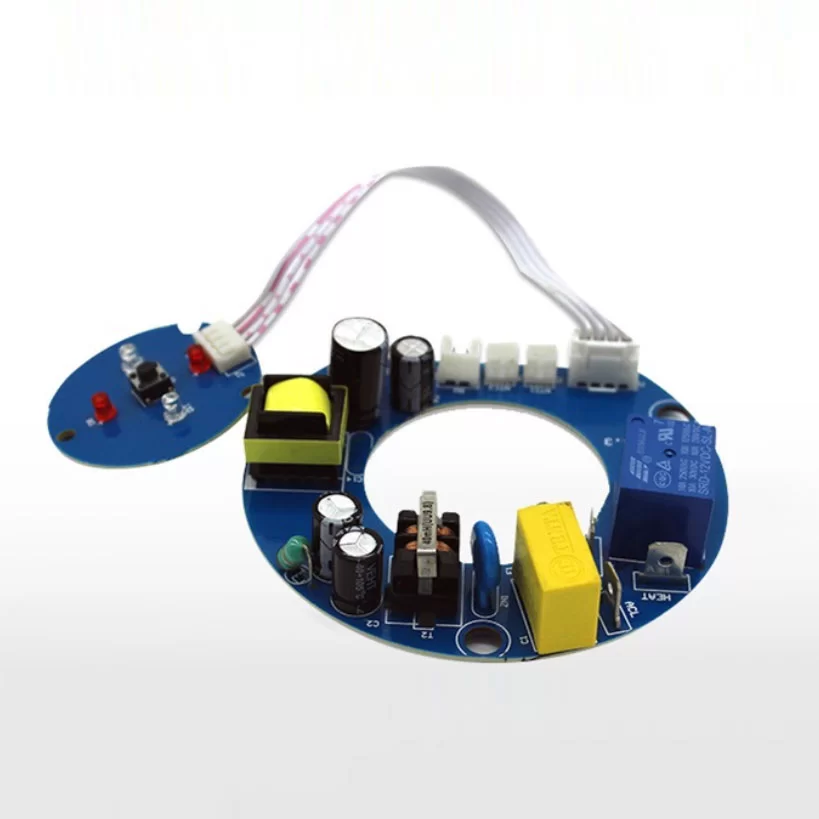


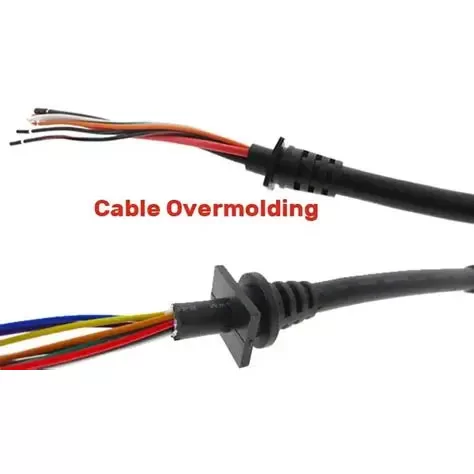


Zero PCB vs General Purpose PCB: Key Differences & Uses
Choosing the right prototyping board is an important step in developing and testing electronic circuits.

What is PCB Prototyping? Benefits & Process
Printed circuit board (PCB) technology continues to evolve, enabling electronic products to become smaller, faster, and more reliable. From smartphones and laptops to industrial control systems, modern electronics depend on PCBs that undergo careful design, manufacturing, assembly, and verification before reaching the market.

PCB Via Filling: Enhancing Reliability and Performance
The continuous development of electronic devices has created a growing demand for compact, high-performance circuit boards. From advanced computing systems to industrial control equipment, modern electronics increasingly rely on printed circuit boards (PCBs) with higher component densities, more complex routing structures, and stricter reliability requirements.

How to Solder Wire to PCB Board Correctly
Wire soldering is an essential skill in electronics development, circuit board repair, and electronic product manufacturing. A properly soldered connection helps maintain stable electrical performance while preventing wires from loosening during handling, installation, or equipment operation.


